
Digital Home Closings in Michigan: What You Should Know
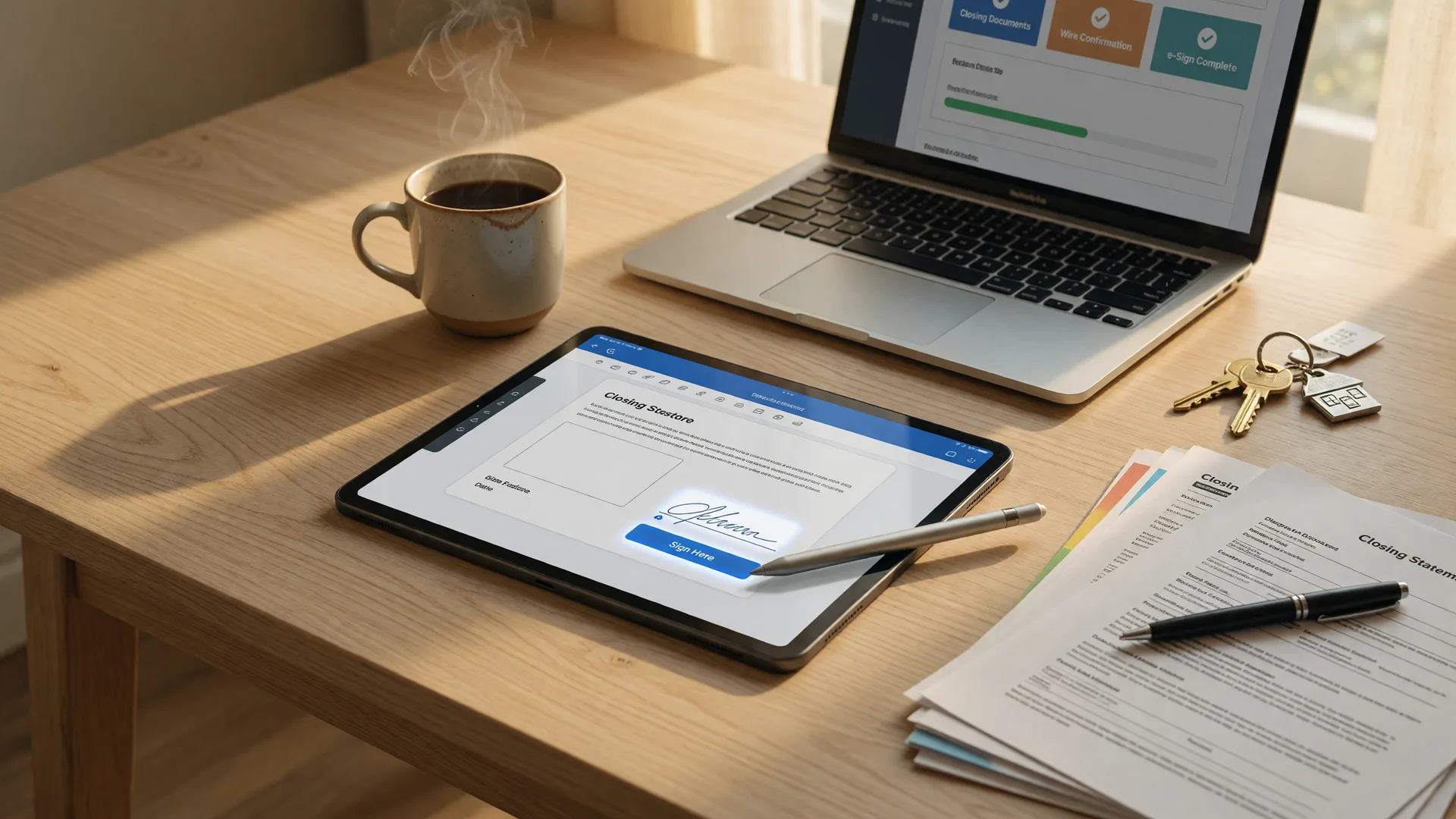
A local agent helps buyers and sellers in Grand Blanc and nearby Mid-Michigan communities by guiding them through every step of a transaction, and that guidance matters more now that the closing itself is going digital. Electronic signatures, remote online notarization, and digital closings are reshaping how Michigan homes change hands, and a knowledgeable local REALTOR translates that technology into a clear, well-paced process: what to sign, when to sign it, and how to protect your interests while the paperwork moves faster than ever.
I am Joyce England, a licensed REALTOR with Keller Williams First in Grand Blanc (Michigan Salesperson License #6501399419), serving buyers and sellers across Genesee, Oakland, Livingston, Shiawassee, Saginaw, Lapeer, and Tuscola Counties. I spent more than 20 years in real estate administration, marketing, and transaction processing before getting licensed in 2014, so I have watched the paperwork side of this business evolve firsthand. This guide explains digital closings and remote online notarization in Michigan in plain language, shares the latest industry data, and walks through exactly what you should expect when you sign on the dotted line this year.
What Is a Digital Home Closing in Michigan?
A digital closing is a home purchase or sale that uses electronic signatures and digital documents instead of paper in at least part of the closing process. Most closings today are hybrid closings: buyers and sellers sign most documents electronically on a tablet or computer, while the final deed, mortgage, and notarized documents are still handled with care about where and how they are recorded.
At the far end of the spectrum is a fully electronic closing, where every step, from signing to notarization to recording the deed, happens digitally. The building blocks that make that possible are electronic signatures (eSignatures), electronic promissory notes (eNotes), remote online notarization (RON), and electronic recording (eRecording) at the county level.
It helps to think of a digital closing as an option, not an obstacle. You can typically review every document before signing day, ask for a paper copy of anything you want to read slowly, and choose the signing style that fits your situation. For a step-by-step walk through the traditional side of the process, my guide to what happens at a real estate closing in Michigan covers the documents, the order of events, and the players at the table.
Is Remote Online Notarization Legal in Michigan?
Yes. Michigan is an early adopter of remote online notarization, and the practice is permanently authorized under the Michigan Law on Notarial Acts (Act 238 of 2003), specifically MCL 55.286b. Under that statute, a notarial act performed on an approved RON platform is presumed to satisfy the traditional "in the presence of a notary" requirement, which means mortgage and deed signings can be completed over secure audio and video rather than face to face.
There are guardrails built into Michigan law. A Michigan notary must notify the Secretary of State and be set up on an approved remote notarization platform before performing remote acts. The platform must verify the signer's identity and create an audio-visual recording of the session. Michigan currently allows remote online notarization but does not allow remote ink notarization (RIN), where a document is signed in ink and notarized remotely afterward.
What this means for a Mid-Michigan buyer or seller is simple: when your lender or title company offers a remote notarization, it is a legitimate, regulated option, not a gray-area shortcut. The notary still verifies your identity, still administers the oath or acknowledgment, and still keeps an electronic journal of the act.
How Common Are Digital Closings in 2026?
Digital closings are widely offered but not yet universally used, and that gap is worth understanding before you sign. The 2025 State of eClose Adoption Report from Snapdocs found that 90% of mortgage lenders offered some form of digital closing in 2025, up from 74% in 2023, yet only 14% of lenders closed more than 80% of their loans digitally. Industry estimates put eClosings at roughly 9% of mortgage originations overall, which means the capability has arrived faster than the habit.
The trend lines point in one direction. Buyers increasingly expect the option: a September 2026 ServiceLink survey reported that 88% of recent homebuyers said the ability to e-sign some or all closing documents would affect their choice of lender or provider. On the agent side, the NAR 2025 REALTORS Technology Survey found electronic signatures were the most widely adopted technology among agents at 79%, ahead of social media. And digital closings move faster: lenders using eClosing platforms averaged about 41 days from application to close, compared with roughly 49 days for peers who did not.
The practical takeaway for Mid-Michigan buyers and sellers: digital is now the default expectation at many title companies and lenders, but a fully electronic closing depends on your lender, your title company, and your county's recording capabilities. Ask, don't assume.
How Does E-Recording Affect Digital Closings in Michigan?
The final step of any closing is recording the deed and mortgage with the county register of deeds, and that is where the digital chain can still stop. About 75 of Michigan's 83 counties accept eRecording of deeds and mortgages, so most closings in the state can be recorded entirely electronically. When a county does not accept eRecording, the title company simply prints and physically records the final documents, and everything before that point can still be digital.
In the seven counties I serve, from Genesee and Oakland to Livingston, Shiawassee, Saginaw, Lapeer, and Tuscola, the process is managed by the title company and closing agent, and my job is to make sure you understand where your transaction stands at every step. The community-by-community picture of where you might buy or sell is on my cities served page, which maps the area in more detail.
What Happens at a Digital Closing Step by Step?
A digital closing follows the same core sequence as a paper closing, with the paperwork arriving electronically. Here is what a typical hybrid closing looks like for a buyer or seller in Michigan:
- Pre-close review. Your lender and title company send the closing documents, including the Closing Disclosure or settlement statement, for review before signing day. This is the single most important window to ask questions.
- Electronic signing session. You sign the bulk of the documents on a tablet or computer using an eSignature platform. You can be in the title office, at home, or anywhere you have a stable connection.
- Notarized documents. The deed, mortgage, and affidavit documents are notarized, either in person with a mobile notary or remotely through an approved RON session with identity verification and a recorded video.
- Funding. The lender wires the loan funds, the buyer's funds are confirmed, and the title company clears disbursement.
- Recording. The deed and mortgage are recorded with the county register of deeds, electronically where accepted, and the title company or closing agent confirms the recording number.
- Keys and documents. You receive your keys, your final settlement documents, and a recording confirmation. For sellers, proceeds are disbursed according to the settlement statement.
If you want the full timeline from contract to keys, including appraisal, inspection, and final walkthrough, my step-by-step closing guide lays it out in order. Sellers can also see how transfer documents and closing costs break down in my guide to Michigan property transfer for sellers and the Michigan transfer tax and closing cost breakdown.
What Are the Benefits of a Digital Closing?
Digital closings are popular for a reason, and the benefits show up in real ways for Mid-Michigan buyers and sellers:
- Convenience. You can sign most documents from home, from work, or even from out of state. That matters for relocation clients, seasonal residents, and families spread across the country.
- Clarity. Electronic platforms let you review documents before signing day and often flag exactly where your signature is needed, reducing the rush of a paper stack at the table.
- Speed. Industry commentary notes that remote online notarization can compress closings from 14 to 21 days down to a week or fewer in some transactions, because coordination happens without physical logistics.
- Accessibility. Remote signing makes it easier for buyers and sellers with mobility limitations, busy schedules, or long distances to participate fully in their own closing.
- Fewer transcription errors. Digital documents flow directly from the preparer to the signing platform, cutting down on retyped names, addresses, and figures.
None of that means the human element disappears. Technology changes the medium; it does not change the care required. For more on how digital tools are woven into the transaction, see my post on the role of technology in modern real estate.
What Should You Ask Before a Digital Closing?
A few questions at the right time can prevent most closing-day surprises. Ask your lender and title company these before signing day:
- Can I review every document before the session? You should never feel forced to sign something you have not seen. Most digital platforms include a review period.
- Will the notarization be in person or remote? Knowing this in advance tells you whether to plan a visit to the title office or to prepare your webcam and ID for a remote session.
- Is eRecording available in my county? This affects whether your deed and mortgage will be recorded digitally or filed in paper form.
- Can I choose a paper closing if I prefer? Many title companies still offer traditional in-person signings, especially for sellers. There is no shame in choosing the format that makes you comfortable.
- Who do I contact with questions after signing? Your closing agent, lender, and REALTOR should all be available through recording and disbursement.
How Does a Local Agent Help You Navigate a Digital Closing?
This is where the value of a local agent shows up most clearly. A digital closing removes the physical table, but someone still needs to sequence the moving pieces, check the math, and make sure nothing gets lost between the lender, the title company, the notary, and the county register. In Grand Blanc and the surrounding communities I serve, that someone is me.
Licensed since 2014 with more than 20 years of behind-the-scenes transaction experience, I know where closings stall and what the paperwork is supposed to say. I review the settlement figures alongside my clients, flag anything that does not match the offer or the loan estimate, coordinate timing with the lender and title company, and stay personally involved from the first conversation to the day the deed records. Clients tell me they value that organization and attention to detail, because a digital process still needs a human who knows the rules of the road. You can read more about how clients describe the experience on my working with Joyce page and testimonials page.
I work Monday through Friday from 9:00 AM to 5:00 PM, with appointments available outside those hours when your schedule needs it, and I am glad to review documents or answer questions at any stage. If you are starting a search and wondering how an agent fits into the process, the posts on finding an agent in Grand Blanc and how buyer agent compensation works in 2026 give you the background before you ever sign a document.
A Note on Professional Guidance
This guide is educational, not legal or financial advice. I am a REALTOR, not a notary, lender, title agent, appraiser, or attorney. Verify loan terms, notarization requirements, and recording questions with your lender and closing agent, and bring any contract or legal question to a qualified Michigan real estate attorney. I am glad to answer your real estate questions about the buying and selling process itself, and to point you to trusted local professionals across Mid-Michigan.
FAQ: Digital Closings and Remote Online Notarization in Michigan
Is remote online notarization legal in Michigan?
Yes. Michigan permanently authorizes remote online notarization under MCL 55.286b. Notaries must use approved platforms, verify identity, and record the session. Remote ink notarization (RIN), where a document is signed in ink first, is not allowed in Michigan.
Will my closing be fully digital?
Not necessarily. Most close as hybrid closings: eSigned documents plus in-person or remote notarization. Whether the deed records digitally depends on the county, since about 75 of Michigan's 83 counties accept eRecording. Your title company will confirm the format in advance.
Can I ask for a paper closing instead?
Usually, yes. Many title companies still offer traditional in-person signings, and you can always request paper copies of any document to review slowly. Choose the format that makes you comfortable, and ask your closing agent early.
How does a local agent help buyers and sellers in Grand Blanc and nearby communities?
A local agent sequences the lender, title company, notary, and county steps, reviews settlement figures, flags errors, and stays personally involved through recording. Joyce England, REALTOR at Keller Williams First, brings 20-plus years of transaction experience to that role across seven Mid-Michigan counties.
Who is Joyce England and how do I contact her?
Joyce England is a licensed Michigan REALTOR (Salesperson #6501399419) at Keller Williams First in Grand Blanc, licensed since 2014. She serves buyers and sellers across seven Mid-Michigan counties and can be reached at 810-513-3335 or through her contact page.
Related Reading
- What Happens at a Real Estate Closing in Michigan?
- What to Expect at Closing: A Step-by-Step Guide
- How AI Can Help Buyers Understand Inspections, Disclosures, and Contracts
- The Role of Technology in Modern Real Estate
- Michigan Property Transfer: A Seller's Guide
- Michigan Transfer Tax and Closing Cost Breakdown
- Understanding Buyer Agent Compensation in 2026
- About Joyce England, REALTOR
- Cities Served Across Mid-Michigan
- Contact Joyce England
For community-level perspective on where you might buy next, including local neighborhoods and everyday life, my team also publishes area guides at midmichiganliving.com.
Tags
Industry Insights · Home Buying · Home Selling · Buyer Education · Seller Education · Michigan Real Estate · Homeowner Tips · First-Time Buyers · Seller Guides · Mortgage & Financing

Keller Williams First · Licensed since 2014 · 20+ years of real estate industry experience · 810-513-3335