Michigan Property Transfer: What Sellers Need to Know
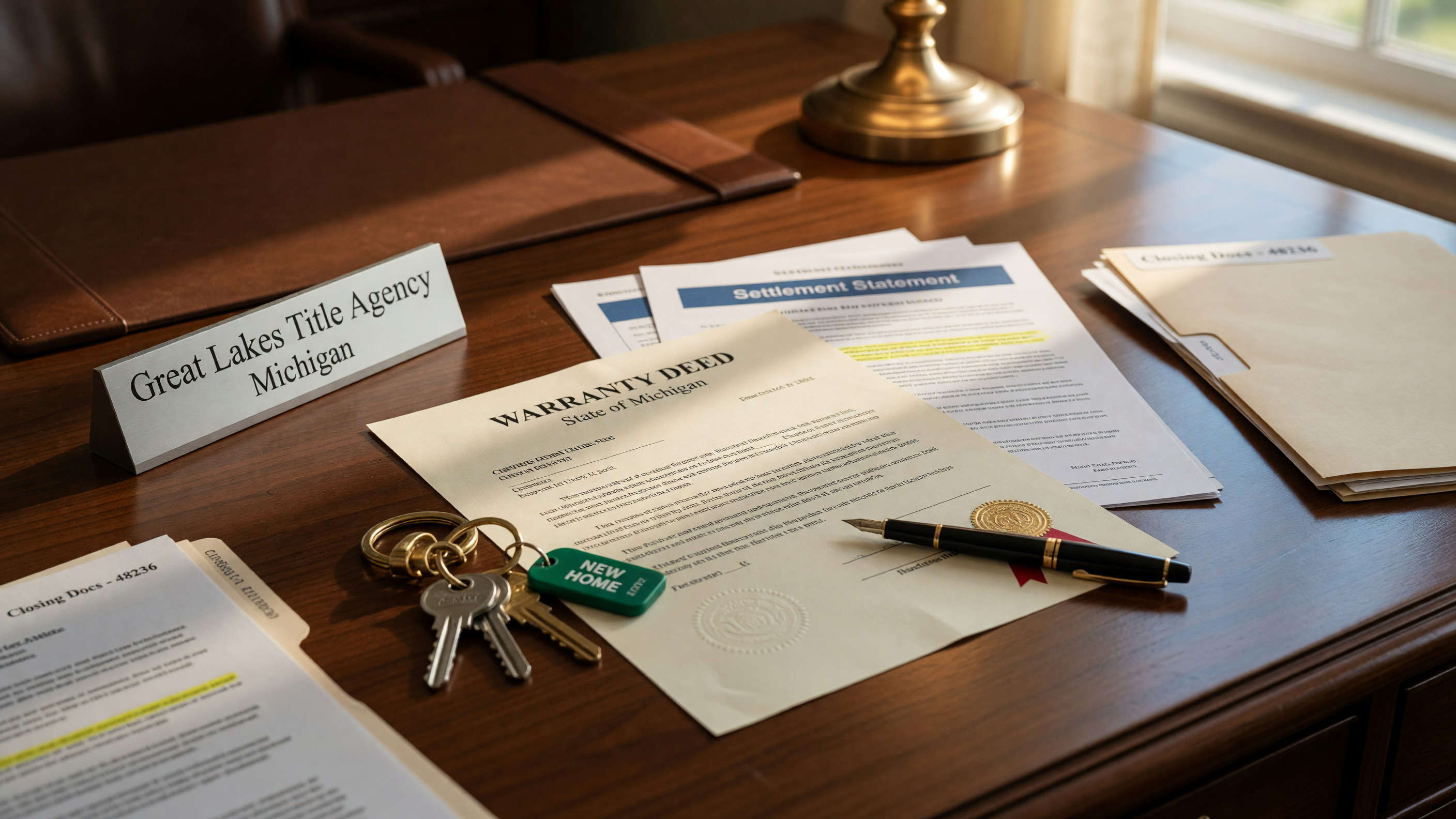
Selling a home is one of the most significant financial transactions most people will ever make, and the property transfer process in Michigan has its own specific rules and requirements. Whether you're a first-time seller or you've been through it before, understanding what happens behind the scenes — from deed preparation to title searches to the closing table — helps you feel confident and prepared. In this guide, I'll walk you through the Michigan-specific elements of a property transfer from the seller's perspective, so you know exactly what to expect.
Understanding Deed Types in Michigan
The deed is the legal document that transfers ownership of real property from one party to another. In Michigan, there are three main types of deeds you'll encounter in residential transactions:
- Warranty Deed. This is the most common deed type in residential real estate sales. A warranty deed provides the buyer with the strongest protection — it guarantees that the seller holds clear title to the property and has the right to sell it. If a title issue surfaces after the sale, the buyer has legal recourse against the seller. When you sell your home, you'll almost certainly be asked to provide a warranty deed.
- Special Warranty Deed (also called a Covenant Deed). This deed guarantees that the seller hasn't created any title defects during their period of ownership but doesn't make promises about the title's history before they owned the property. It's less common in standard residential sales but may appear in certain situations, such as when a property is being sold by a business entity or trust.
- Quitclaim Deed. A quitclaim deed transfers whatever interest the seller has in the property without any guarantees about the quality of the title. You'll see quitclaim deeds used in transfers between family members, in divorce settlements, or to clear a name from a title — but they're rarely used in arm's-length residential sales because they offer the buyer no protection.
In a typical residential sale, the title company or closing attorney will prepare the deed for you. You'll review and sign it at closing, and it will be recorded with the county Register of Deeds after the transaction is complete. Your real estate agent and the title company handle most of this process, but it helps to understand what you're signing.
The Title Search: Protecting the Buyer (and You)
Before a sale can close, a title search must be conducted to verify that the property has a clear and marketable title. This is almost always performed by a title insurance company or a real estate attorney, and it's typically paid for as part of the closing costs.
The title search examines public records to identify any:
- Outstanding mortgages or liens against the property
- Judgments, tax liens, or unpaid assessments
- Easements or encumbrances that could affect the buyer's use of the property
- Errors in public records, legal descriptions, or prior deed transfers
- Undisclosed heirs or previous owners with a potential claim to the property
As a seller, the title search is mainly something that happens in the background. But if the search uncovers an issue — an old lien, a boundary discrepancy, or a recorded easement you didn't know about — it needs to be resolved before closing. This is one reason I always recommend sellers begin the title review process early. The sooner we identify and address any issues, the fewer delays at the closing table.
Once the title is confirmed clear, the buyer will receive a title insurance policy. Owner's title insurance protects the buyer against future claims on the property, while lender's title insurance protects the mortgage company. In Michigan, the seller typically pays for the owner's title insurance policy, though this can be negotiated as part of the purchase agreement.
The Seller's Disclosure Statement
Michigan law (MCL 565.965) requires sellers of residential real property to provide a written Seller's Disclosure Statement before the buyer signs the purchase agreement. This is one of the most important documents you'll prepare as a seller, and it's also one of the most commonly misunderstood.
The disclosure statement asks you to report known material defects and conditions across categories including:
- Structural elements (foundation, roof, walls)
- Plumbing, electrical, and HVAC systems
- Water and sewer (municipal or private well and septic)
- Environmental concerns (radon, asbestos, lead paint, mold)
- Past repairs, renovations, insurance claims, or disputes
- Lot conditions, easements, and flood zone status
You're required to answer honestly to the best of your knowledge. The form specifically allows you to mark items as "unknown" when you genuinely don't have the information. You're not expected to hire an inspector or become an expert on every system in your home. But if you know about a defect and fail to disclose it, you could face legal liability after the sale.
I always advise my seller clients to be thorough and transparent. An honest, complete disclosure doesn't scare buyers away — it builds trust. I've seen transactions fall apart not because of what was disclosed, but because something important was left out and surfaced during the inspection or after closing.
Michigan Real Estate Transfer Tax
Michigan imposes a real estate transfer tax at both the state and county levels. As a seller, you need to understand this cost because it will be part of your closing expenses.
- State transfer tax: $3.75 per $500 of the property's sale price (equivalent to $7.50 per $1,000). For a home selling at $300,000, that's $4,500 in state transfer tax.
- County transfer tax: $0.55 per $500 of the sale price ($1.10 per $1,000) in most Michigan counties. This amount is slightly higher in counties with populations over two million.
Unless otherwise negotiated in the purchase agreement, the seller typically pays the transfer tax in Michigan. However, transfer tax responsibility is always negotiable — in some transactions, the buyer agrees to cover part or all of the transfer tax as an incentive or as part of the overall deal structure.
Certain transfers are exempt from the Michigan transfer tax, including transfers between spouses, transfers to trusts for the benefit of the grantor, and transfers of low-value properties. Your title company or closing attorney will determine whether any exemptions apply to your transaction.
What to Expect at Closing from the Seller's Side
Closing day is when the property officially changes hands. For sellers, here's what the process typically looks like:
- Final walkthrough. The buyer will conduct a final walkthrough of the property, usually 24–48 hours before closing, to confirm the home is in the agreed-upon condition and that any negotiated repairs have been completed. Make sure the home is clean, all personal items are removed, and you've transferred any relevant warranties or manuals.
- Document review and signing. At the closing table (or through a mobile notary), you'll sign the deed, the closing disclosure, the settlement statement, and various affidavits and acknowledgments. Your closing agent will walk you through each document. Bring a valid government-issued photo ID.
- Fund disbursement. Once all documents are signed and funded, the deed is recorded with the county. Your proceeds — the sale price minus your outstanding mortgage balance, closing costs, transfer taxes, agent commissions, and any other agreed-upon deductions — are disbursed to you, typically by wire transfer or certified check.
- Key handoff. The buyer receives the keys, garage door openers, and any relevant access codes or alarm information. The home is officially theirs.
The entire closing process usually takes about an hour for sellers. I walk my clients through every document beforehand so there are no surprises, and I'm always available to answer questions before, during, and after closing. For a more detailed walkthrough, see my complete guide to what to expect at closing.
Preparing for a Smooth Transfer
Here are a few practical steps you can take early in the process to ensure a smooth property transfer:
- Gather your documents. Locate your deed, mortgage statement, property survey, past inspection reports, and any HOA documents. Having these ready early speeds up the process.
- Address known issues. If you're aware of any title defects, outstanding liens, or property condition issues, address them as early as possible. Waiting until closing to resolve problems creates delays and stress.
- Complete your disclosure thoroughly. Don't rush through the Seller's Disclosure Statement. Take your time, answer honestly, and reach out to me if you have questions about how to handle something. A thorough disclosure protects everyone.
- Plan your move. Coordinate your move-out timeline with the closing date. You'll need to be fully moved out and the home in agreed-upon condition before the buyer takes possession.
- Cancel or transfer utilities. Contact your utility providers to schedule disconnection or transfer for the day of closing. The buyer will set up service in their name.
Related Reading
- Understanding Michigan's Real Estate Disclosures — a deep dive into disclosure requirements for buyers and sellers
- Michigan's Transfer Tax and Closing Cost Breakdown — a detailed breakdown of all closing costs
- What to Expect at Closing: A Step-by-Step Guide — the full closing process from contract to keys
- Selling Your Home — Joyce's complete seller resource hub
Questions About Selling Your Home?
The property transfer process has a lot of moving parts, but you don't have to navigate it alone. With over 20 years of experience in real estate transactions — including the behind-the-scenes details of deal processing, title work, and closings — I bring a level of knowledge and attention to detail that ensures nothing falls through the cracks. Whether you're getting ready to list or just starting to think about selling, I'm happy to answer your questions.
Schedule a consultation, call me at 810-513-3335, or email joyce@midmichiganliving.com. I'll make sure you understand every step before you get there.

Keller Williams First · 810-513-3335 · Schedule a consultation