Mid-Michigan Housing Market Outlook 2026: How National Trends Are Shaping Local Opportunities
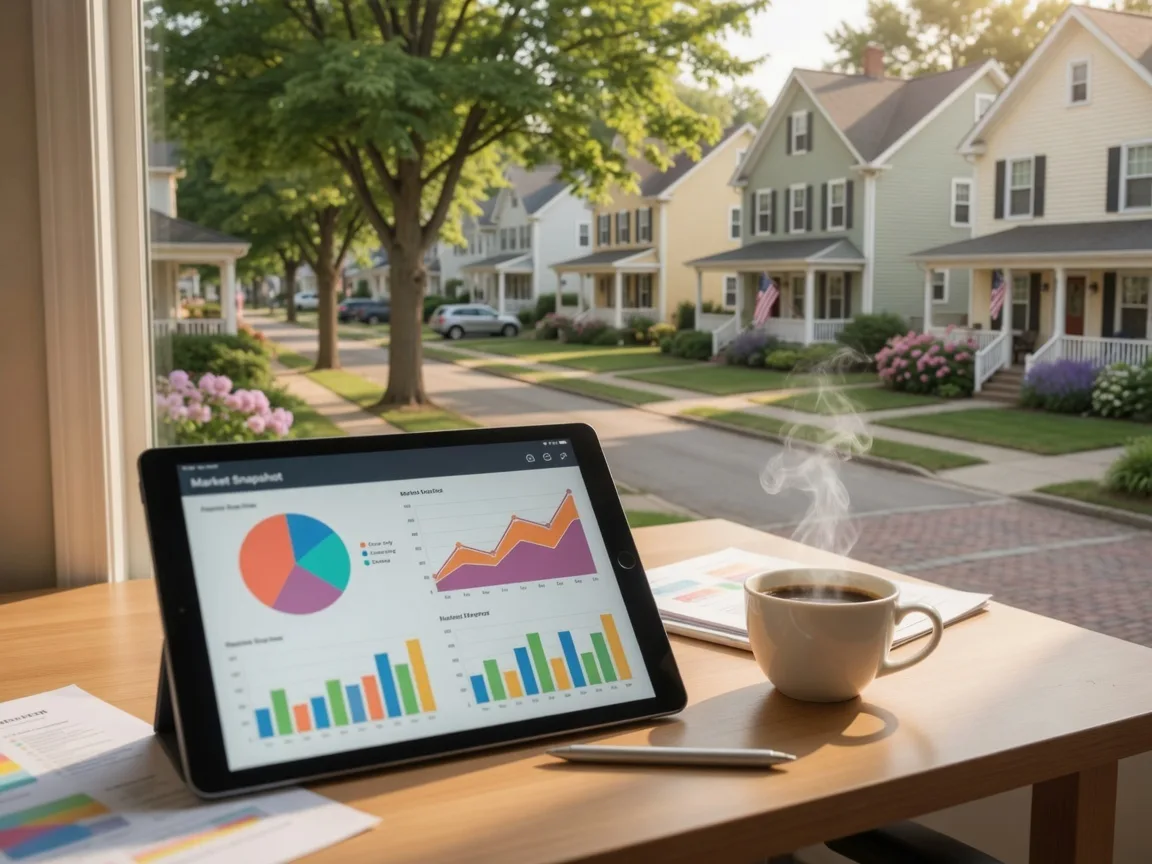
The national housing market in 2026 is telling two stories at once. Mortgage rates have settled in the mid-6% range after starting the year above 7%. Inventory is gradually improving, but remains well below what economists would call a balanced market. Home prices are still climbing in most regions, though the pace of appreciation has slowed. And first-time buyers are facing one of the most challenging affordability environments in decades -- accounting for just 21% of purchases nationally, near historic lows.
How do these national trends play out in Mid-Michigan? That is the question I hear most often from buyers and sellers across Genesee, Oakland, Livingston, Lapeer, Shiawassee, Saginaw, and Tuscola Counties. And the answer is encouraging: while the national narrative is one of limited affordability and fierce competition, our local market offers a notably different picture -- one defined by real opportunity, sensible price points, and favorable conditions for both buyers and sellers who understand what they are looking at.
In this post, I will break down what the national data means, how each Mid-Michigan county is performing, and what buyers and sellers should keep in mind for the second half of 2026 and beyond. I also answer common voice-search questions like "Is it still a good time to buy a home in Mid-Michigan?" and "Are home prices dropping in Michigan?" in a conversational Q&A format throughout the post.
The National Picture: A Market in Transition
Nationally, the housing market is in a period of normalization. After the pandemic-era frenzy that saw bidding wars, waived inspections, and double-digit annual appreciation, the market has cooled into something more sustainable. But "more sustainable" does not mean "easy" for the average buyer.
Here is the national landscape as of mid-2026:
- Mortgage rates are averaging around 6.55% for a 30-year fixed loan, according to Freddie Mac. That is down from the 7%-plus peak in early 2026 but still roughly double the rates buyers enjoyed in 2021 and 2022.
- Home prices are up about 1.3% year over year nationally, per the Case-Shiller Index. Price growth has slowed considerably but has not turned negative in most markets.
- Inventory is slowly improving. Total housing inventory nationwide has increased roughly 10-15% compared to the same period in 2025, though it remains below pre-pandemic averages.
- First-time buyer share has fallen to about 21% of purchases, near the lowest level on record. High prices and elevated rates are squeezing first-timers out of competitive markets.
- Cash sales remain elevated, particularly among baby boomers and move-up buyers who have substantial equity from previous homes.
Those are the national headlines. But real estate is hyper-local, and what is happening in Mid-Michigan looks quite different from what buyers in coastal metros or even major Midwestern cities are experiencing.
How Mid-Michigan Compares: A Local Advantage
Mid-Michigan has several structural advantages that insulate it from the worst of the national affordability crisis. Our median home prices remain significantly below the national median. Our job market is diversified across healthcare, manufacturing, education, and logistics. And our communities offer a quality of life that attracts buyers from higher-cost areas looking to stretch their housing dollars further.
Here is the question buyers are asking: "Is it still a good time to buy a home in Mid-Michigan in 2026?"
The short answer is yes -- with the caveat that buyers need to be prepared, pre-approved, and clear about their priorities. The days of rushing into a multiple-offer situation on any available home are largely behind us. Today's Mid-Michigan market rewards patience, preparation, and good guidance.
Michigan's statewide median home value as of May 2026 sits around $293,956, up about 5.4% year over year according to Redfin data. But that statewide figure masks significant variation by county, which is where local expertise matters most.
County-by-County: Where Does Your Opportunity Lie?
Each county in my service area has its own market rhythm. Understanding these differences is key to making a smart move, whether you are buying your first home, upgrading to a larger property, or selling to downsize or relocate.
Genesee County: Solid Value and Strong Demand
Genesee County remains one of the most balanced markets in Mid-Michigan. With a median sold price around $232,750 depending on the community and property type, the county offers significant bang for the buck. Inventory has improved compared to last year, giving buyers more choices and a bit more leverage in negotiations. Homes in the more desirable communities -- Grand Blanc, Fenton, Davison -- are still selling quickly, typically within 17 to 30 days. But the frantic pace of 2021-2022 has given way to a more reasonable rhythm.
For sellers in Genesee County, the key is pricing. Overpricing is the most common mistake I see in today's market. Buyers are more discerning than they were two years ago, and a home that sits for three weeks without an offer often needs a pricing adjustment. Properly priced homes in good condition are still attracting multiple showings and strong offers within the first week.
Oakland County: Premium Prices, Premium Schools
Oakland County commands a premium for good reason. With a median sale price of approximately $382,000, the county is home to many local school districts; verify attendance boundaries directly with the district, highest concentration of amenities, and strongest job connectivity in the region. The market here has moderated slightly from last year, with price appreciation slowing to about 2.4% year over year. But inventory in desirable communities like Clarkston, Lake Orion, and Holly remains tight -- homes are averaging about 15 days on market.
Buyers entering the Oakland County market should be pre-approved and ready to act when the right property appears. Sellers should invest in professional presentation, because competition for buyer attention has intensified as inventory has increased. That is where professional photography, strategic marketing, and strong listing copy make the difference between a quick sale at a strong price and a listing that languishes.
One trend I have noticed: buyers priced out of Clarkston and Lake Orion are increasingly exploring Holly and Oxford, where prices are more accessible while still offering Oakland County school access and community character. This "spillover" effect is driving renewed interest in communities that were previously overlooked.
Livingston County: Steady Growth and Desirability
Livingston County continues to post stronger appreciation than its neighbors, with a median sale price of approximately $411,000 and year-over-year growth of about 5.5%. That is the highest appreciation rate in my service area. Communities like Brighton, Hartland, and Howell attract buyers who prioritize schools, access to outdoor recreation, and a suburban lifestyle with easy commutes to Ann Arbor and the Detroit metro area.
For buyers, the Livingston County market requires patience and a clear budget. Homes here sell in about 26 days on average, giving slightly more time to evaluate options than in the hottest Oakland County neighborhoods. But desirable properties under $450,000 still attract multiple offers, and having a local agent who knows the nuances of each community is an important advantage.
For sellers, Livingston County offers strong tailwinds. The combination of limited inventory and sustained demand means well-priced, well-presented homes continue to sell close to asking price. The risk is overpricing based on what your neighbor's house sold for in 2024 — the market has shifted, and pricing strategy needs to reflect current data, not past peaks.
Lapeer, Shiawassee, and Saginaw Counties: Opportunity in Affordability
Buyers who are price-sensitive or looking for more space and land should focus on the counties to the north and west of the region's core markets. Lapeer County offers median prices well below the state average, with historic downtowns and access to rural and equestrian properties. Shiawassee County, anchored by Owosso, is seeing renewed interest from buyers who want a small-town setting at entry-level price points. And Saginaw County's median prices remain among the most affordable in the region, with nearly $1 billion in regional investment fueling a promising revitalization story.
These counties are particularly attractive to first-time buyers, investors, and anyone who prioritizes square footage and land over proximity to urban amenities. For the right buyer, these communities represent a strong value proposition in Mid-Michigan right now.
What Interest Rate Trends Mean for Your Buying Power
Mortgage rates in Michigan are currently averaging between 6.4% and 6.9% for a 30-year fixed loan, depending on the lender and borrower qualifications. That is significant compared to the sub-3% rates of 2020 and 2021. But here is the perspective I share with every buyer: rates are only half the equation.
"Will mortgage rates go down in 2026?" is a question I hear from buyers who are hoping to time the market. The honest answer is that no one can predict short-term rate movements with certainty. What I do know is that waiting for rates to drop carries its own risk: if rates do decline, buyer demand is likely to surge, pushing prices higher and potentially negating any monthly payment savings from a lower rate. The better strategy is to buy when you find the right home at the right price, with a mortgage you can comfortably afford, and refinance if rates improve down the road.
Here is how rate changes affect buying power in practical terms. On a $232,750 home (the September 2026 Genesee County median sold price), a 6.5% interest rate produces a monthly principal and interest payment of approximately $1,471. At 7.0%, that same home costs about $1,549 per month, a difference of roughly $78. On a $382,000 home (a typical Oakland County price point), the difference between 6.5% and 7.0% is about $127 per month. These numbers matter, but they should not be paralyzing, especially when Mid-Michigan prices remain well below national averages.
Quick Tip for Buyers
If you are waiting for rates to drop before buying, consider this: a 1% rate drop on a $250,000 loan saves about $170 per month. But if home prices rise 5% while you wait, you lose about $12,500 in equity on that same home. Timing the rate market is rarely the winning play -- finding the right home at the right price is.
What Inventory Trends Mean for Sellers
Inventory is trending in the right direction for buyers, but sellers still hold meaningful advantages in most Mid-Michigan markets. The region is not oversupplied -- it is moving from a "strong seller's market" toward a "balanced market." In practical terms, that means well-priced, well-marketed homes are still selling at favorable terms for sellers, but the window of unconditional seller leverage is narrowing.
"Is it still a seller's market in Mid-Michigan?" The answer depends on the county and price point. In Oakland and Livingston Counties, it remains a seller's market, particularly for homes under $400,000. In Genesee County, the market is more balanced, giving buyers more room to negotiate on terms like closing costs, inspection contingencies, and closing timelines. In Lapeer, Shiawassee, and Saginaw Counties, conditions vary by community, but overall the advantage leans toward buyers who come prepared with financing in order.
For sellers, the implications are clear. Pricing your home correctly from day one is more important than ever. Homes that are overpriced in today's market sit longer, accumulate "days on market" that become a negotiating disadvantage, and often sell for less than they would have with a realistic initial price. I use AI-powered pricing analysis combined with local MLS data, comparable sales, and market trend analysis to help my clients set a price that attracts serious buyers while maximizing their return.
The Buyer Demographics Shift: What It Means for Mid-Michigan
National data shows that first-time buyers are at a historic low (21% of purchases), while repeat buyers and cash buyers dominate. In Mid-Michigan, the picture is more balanced. Our affordability advantage means first-time buyers can still enter the market here in ways that are increasingly difficult in other regions.
I am also seeing a growing number of out-of-state buyers exploring Mid-Michigan. Remote work flexibility has allowed buyers from higher-cost states to relocate here, bringing equity from previous home sales and expanding the buyer pool. Communities like Grand Blanc, Brighton, and Lake Orion are especially popular with relocation buyers because they offer schools, walkable downtowns, and lifestyle amenities that compare favorably to what buyers left behind -- at a fraction of the cost.
This demographic shift has implications for local sellers. A listing that appeals to out-of-state buyers needs to provide more context than one targeting local buyers -- information about commuting distances, neighborhood character, school ratings, and local amenities becomes a key differentiator in marketing. That is exactly the kind of content I build into my listing marketing strategy for every property.
Affordability in Perspective: Why Mid-Michigan Stands Out
Perhaps the most important story of 2026's housing market is the growing divide between what buyers can afford in different parts of the country. The national median home price now sits well above $400,000, and in many coastal metros, buyers need six-figure incomes just to qualify for a mortgage on an entry-level home. Mid-Michigan offers a genuine alternative.
"Are home prices dropping in Michigan?" is a question I get from buyers hoping for a bargain. The answer is no -- prices are not dropping. They are still appreciating, but at a slower, more sustainable pace. That is good news for sellers who bought or refinanced during the pandemic years, and it is good news for buyers who want to purchase with confidence that their home will hold its value. A stable, gradually appreciating market is far healthier for long-term homeowners than the boom-and-bust cycles that defined earlier eras.
Here is what makes Mid-Michigan unique: you can buy a well-maintained three-bedroom home in a strong school district in Grand Blanc, Fenton, Davison, or Holly for $250,000 to $300,000. That same house in many other parts of the country would cost $500,000 or more. Our property taxes are reasonable. Our cost of living is below the national average. And our communities are welcoming, well-maintained, and growing in ways that support long-term property values.
Looking Ahead: What to Expect for the Rest of 2026 and Into 2027
Based on current data and trends, here is my outlook for Mid-Michigan real estate through the end of 2026 and into 2027:
- Interest rates will likely remain in the 6% to 7% range for the foreseeable future. A significant drop requires a clear shift in Fed policy and inflation data, which does not appear imminent.
- Inventory will continue to improve gradually, particularly as more homeowners who delayed selling during the low-rate era decide they can no longer wait. This creates more options for buyers but does not signal a market collapse.
- Price appreciation will moderate to the 2% to 5% range in most Mid-Michigan counties, with Livingston and Oakland Counties at the higher end of that range and Genesee, Lapeer, and Saginaw Counties at the lower end.
- Buyer demand will remain steady, supported by Mid-Michigan's affordability relative to the rest of the country and ongoing inbound migration from higher-cost regions.
- First-time buyer programs like MSHDA's MI Home Loan and down payment assistance will remain essential tools for helping qualified buyers overcome the affordability barrier created by elevated rates.
The overarching theme is stability. Mid-Michigan is not headed for a price correction, nor is it returning to the frenzy of 2020-2022. For buyers, that means you can make a thoughtful, well-researched decision without feeling rushed. For sellers, it means you can achieve a strong result with the right strategy and professional representation.
My Advice for Buyers and Sellers Right Now
For Buyers
- Get pre-approved before you start looking. In a market where good homes still sell quickly, pre-approval signals to sellers and listing agents that you are serious. It also gives you clarity on your budget, which reduces stress throughout the process. I have a list of trusted local lenders who know Mid-Michigan markets.
- Think total cost, not just the monthly payment. Work with your lender and me to understand property taxes, insurance, and maintenance costs for each property you seriously consider. A home in different counties can have very different carrying costs.
- Broaden your search area. If Oakland County prices are stretching your budget, explore Genesee or Livingston County communities. A 15-minute change in location can mean a $50,000 to $100,000 difference in price with comparable quality of life.
- Don't try to time the market. If you find the right home at the right price for your budget, buy it. Waiting for rates or prices to change is a gamble I have rarely seen pay off for buyers who ended up waiting.
For Sellers
- Price realistically from day one. The days of listing high and negotiating down are mostly over in today's more balanced market. Homes priced right sell faster and for more money than homes that start high and need price reductions later.
- Invest in presentation. Professional photography, video content, and staging are not optional anymore -- they are the minimum standard for attracting serious buyer interest. I handle all of this for my clients as part of my listing marketing package.
- Market strategically. A sign in the yard and an MLS listing are table stakes. Your home needs a coordinated marketing plan that includes social media promotion, targeted digital advertising, search-optimized listing copy, and neighborhood-focused content to stand out in today's market.
- Understand your buyer. If your home is in a community that attracts out-of-state relocation buyers, your marketing needs to answer the questions those buyers will have -- about schools, commuting, amenities, and community character. Generic listing copy misses that opportunity.
Final Thoughts
The 2026 housing market is a story of moderation and opportunity. The national trends -- elevated rates, modest appreciation, improving inventory -- are real, but they play out differently in Mid-Michigan than they do in most of the country. Our region's combination of affordable prices, strong communities, good schools, and steady demand creates a favorable environment for both buyers and sellers who approach the market with preparation and good guidance.
I have been working in Mid-Michigan real estate for more than 20 years, first behind the scenes in administration and marketing, and as a licensed REALTOR since 2014. I have helped first-time buyers, move-up buyers, downsizers, relocation clients, and sellers across every county I serve. I know what the data means, how to interpret market shifts, and how to help my clients make decisions they feel good about.
If you are thinking about buying or selling a home in Mid-Michigan and want a clear, honest, data-informed perspective, I would love to hear from you. You can schedule a consultation at your convenience, call me at 810-513-3335, or reach out through my contact page. I serve buyers and sellers across Genesee, Oakland, Livingston, Lapeer, Shiawassee, Saginaw, and Tuscola Counties from my office at Keller Williams First in Grand Blanc. Let's talk about what the market looks like for you.
Related Reading
- About Joyce England — Mid-Michigan REALTOR®
- Cities and Communities Served
- Livingston County Real Estate Market Update: Summer 2026
- Oakland County Real Estate Market Update: Summer 2026
- Genesee County September 2026 Market Update
- 14-Step Home Selling Process Checklist
- 12-Step Home Buying Journey Guide
Tags
Frequently Asked Questions
Is it still a good time to buy a home in Mid-Michigan in 2026?
Yes. Mid-Michigan home prices remain well below national averages, with strong communities and steady appreciation. Buyers who are pre-approved and ready can find excellent value across the region.
Are home prices dropping in Michigan right now?
No. Home prices in Michigan are still appreciating, though at a slower pace than the pandemic years. Mid-Michigan counties show 2% to 5% annual appreciation depending on the area.
Will mortgage rates go down in 2026?
Forecasters expect rates to stabilize in the mid-to-high 6% range for the rest of 2026. A significant drop would require clear shifts in inflation data and Fed policy.
What is the most affordable county to buy a home in Mid-Michigan?
Saginaw County offers the lowest median prices, followed by Tuscola and Shiawassee Counties. Genesee County also offers strong value compared to Oakland and Livingston.
Should I wait to sell my home until rates drop?
Not necessarily. Waiting for lower rates and hoping for more buyer demand could backfire if inventory rises further. Well-priced homes in good condition are selling well right now across Mid-Michigan.

Keller Williams First · Licensed since 2014 · 20+ years of real estate industry experience · 810-513-3335