
Living in Flint, MI: Community Guide to Homes, Culture & Convenience (2026)
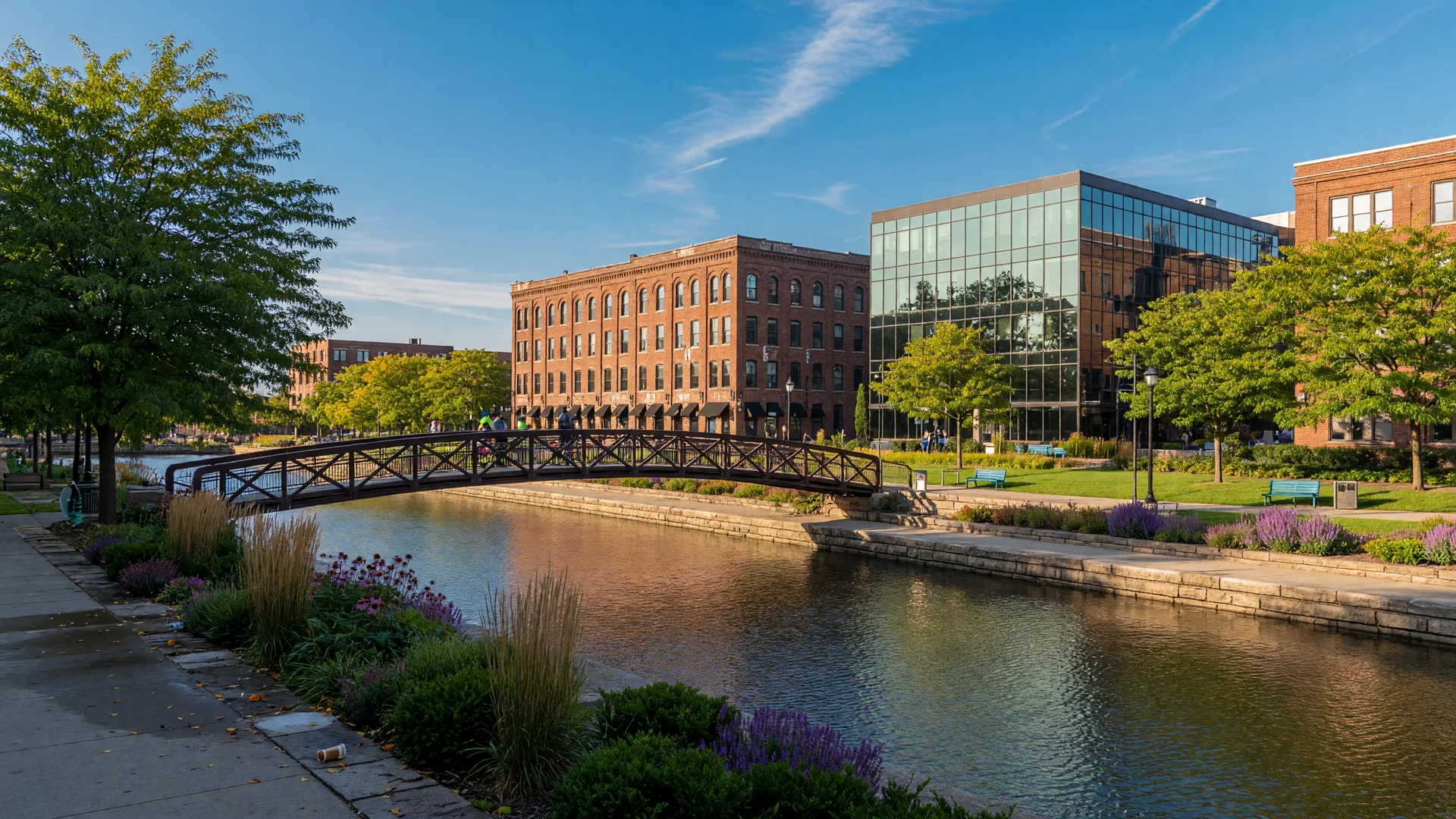
This guide to living in Flint, MI is an honest look at Michigan's original factory town, now the county seat and largest city in Genesee County, and a place with real momentum behind its revival. Flint combines some of the most affordable housing in the state, major cultural institutions, the University of Michigan-Flint campus, and a downtown connected to a riverfront that is being restored block by block. If you are weighing an urban setting with true character and value, here is what living in Flint is genuinely like in 2026.
Where Is Flint, and What Kind of Community Is It?
Flint anchors the center of Genesee County, about 65 miles northwest of Detroit, at the crossroads of I-69, I-75, and US-23 nearby. It is the region's employment, education, healthcare, and cultural center, ringed by the suburban communities of Grand Blanc, Flushing, Davison, and Swartz Creek. For tens of thousands of people, Flint is not a place you only pass through, it is where work, school, medicine, and entertainment all happen.
Flint's identity was forged in the auto industry. This is where General Motors was born, where the Sit-Down Strike of 1936-1937 changed American labor history, and where generations of families built middle-class lives through hard work and community connection. That legacy still shapes how people see themselves, how they treat their neighbors, and how they invest in their neighborhoods.
Housing: Affordability Is the Story
Housing is where Flint creates its most compelling opportunity. Median home values vary by neighborhood but often range from approximately $50,000 to $200,000, with well-maintained homes in desirable areas toward the upper end. That puts homeownership within reach in ways that few other communities in Michigan can match.
- Historic neighborhoods near the Cultural Center: classic homes on tree-lined streets within walking distance of museums and the university.
- University of Michigan-Flint corridor: steady demand, walkability to campus and downtown, and consistent rental desirability.
- Downtown and the riverfront: lofts and condos above the restored riverfront corridor, plus older homes in the surrounding blocks.
- Established suburban-style streets: ranch homes and bungalows across the city's residential districts at accessible price points.
Every neighborhood is different, and condition, street, and block matter enormously. That is exactly where an experienced local agent earns their keep. I walk these neighborhoods daily, and I will tell you honestly which areas match your priorities. My Genesee Township and Flint community guide goes deeper on neighborhoods to watch.
Culture That Rivals Any City in Mid-Michigan
One of the most underappreciated advantages of living in Flint is the quality of its cultural institutions. The Flint Institute of Arts is one of the largest art museums in the Midwest, with a permanent collection of more than 40,000 works and rotating exhibitions that draw visitors from across Michigan. It anchors the Cultural Center district alongside:
- The Flint Institute of Music, home to the Flint Symphony Orchestra and comprehensive music education programs.
- The Flint Public Library, a Carnegie-era landmark that remains a vital community resource.
- Museums, galleries, and community theaters within the same walkable district.
In 2025, major projects opened, including the new YMCA of Greater Flint as part of the LiveWell on Harrison initiative, a public-private investment in health, wellness, and community gathering space. These are regional institutions, not small-town amenities, and for residents who value arts and culture, that is a genuine quality-of-life advantage.
University of Michigan-Flint: An Anchor of Stability
The University of Michigan-Flint is one of the most important institutions in the community, with approximately 6,000 students and a workforce of more than 1,200. UM-Flint is a significant employer and an economic engine for downtown, creating consistent rental demand in surrounding neighborhoods and a built-in customer base for local businesses. The university-adjacent corridor is one of the more promising areas for buyers who want to be near a growing institutional anchor.
Revitalization That Is Building Real Momentum
Flint's revitalization story has not been a straight line, but the investments happening now are substantive, funded, and backed by both public and private capital. Among the most significant projects shaping the area's trajectory:
- The Flint Commerce Center, the transformation of the former Buick City site into a mixed-use development with commercial space, logistics capacity, and job creation potential. It is one of the largest brownfield redevelopments in the state.
- The Flint Riverfront Restoration Project, led by Genesee County Parks, which is reconnecting the city to its river corridor with trails, green space, and improved public access.
- The former Flint Central High School campus, where grant funding is supporting redevelopment that preserves the building's historic character while creating new community space.
Events like Back to the Bricks, the annual car cruise that draws hundreds of thousands of visitors, celebrate Flint's automotive heritage while generating significant economic activity. For a closer look at the county's housing picture, my Genesee County real estate deep dive is the place to start.
Dining and Local Life Downtown
Downtown Flint has built a real dining and gathering scene on and around Saginaw Street. Local favorites residents point to include White Horse Tavern at 621 W Court Street, a gastro pub in a restored carriage house, On The Bricks Food and Spirits at 555 Saginaw Street, and Blackstone's Smokehouse at 531 S Saginaw Street, plus Soriano's Mexican Kitchen at 836 Saginaw Street. Farmers markets, food truck gatherings, and neighborhood festivals round out the calendar through the warmer months.
Location and Commute
Flint's location is genuinely convenient for the region:
- Flint to Grand Blanc: 15 to 20 minutes.
- Flint to Fenton: 20 to 25 minutes.
- Flint to Swartz Creek: 15 minutes.
- Flint to Saginaw: 30 to 35 minutes via I-75.
- Flint to downtown Detroit: 65 to 75 minutes via I-75 in normal traffic.
Bishop International Airport (FNT) sits just southwest of the city, with regular commercial service that makes business and leisure travel far easier than most communities of this size enjoy.
Schools Serving Flint
Flint Community Schools serves most of the city, with a range of academic, arts, and career-technical programs. Parts of Flint are also served by Kearsley Community Schools, a comprehensive pre-K through grade 12 district. As always, attendance boundaries depend on the exact address, so verify the assignment for any property directly with the district. Official information is available at flintschools.org and kearsleyschools.org.
An Honest Assessment
I believe in being straightforward about the communities I serve. Flint faces real challenges; some neighborhoods still struggle with vacancy, property conditions, and infrastructure needs. These are facts, not footnotes. But they are also communities where the investment pipeline is robust, the cultural and educational infrastructure is genuine, and the affordability equation creates opportunity that does not exist in many other places. The right neighborhood, the right property, and the right guidance make all the difference, and that conversation is best had in person.
Should You Call Flint Home?
If you want the lowest cost of entry in Mid-Michigan, walkable access to world-class cultural institutions, a major public university downtown, and the sense that you are part of a comeback story still being written, Flint deserves a close look. I know the neighborhoods, the blocks, and the market, and I would love to help you find the right fit.
Call me at 810-513-3335 or email joyce@midmichiganliving.com to start the conversation, or use my contact page to get in touch.
Explore More About Flint
Frequently Asked Questions
How affordable are homes in Flint, Michigan?
Median home values in Flint vary by neighborhood but often range from approximately $50,000 to $200,000, with well-maintained homes in desirable areas toward the upper end. It is among the most accessible housing in the state.
What are the best things to do in Flint?
Flint's Cultural Center is a highlight, with the Flint Institute of Arts, the Flint Institute of Music, and the Flint Public Library. Downtown offers dining on Saginaw Street, the restored riverfront, Back to the Bricks vehicle events, and the University of Michigan-Flint campus.
What school districts serve Flint, MI?
Flint Community Schools serves most of the city, with parts of Flint served by Kearsley Community Schools. Attendance boundaries depend on the address, so confirm the assignment directly with the district.
How far is Flint from Detroit and Saginaw?
Flint is about 65 to 75 minutes from downtown Detroit via I-75 and roughly 30 to 35 minutes from Saginaw. Bishop International Airport provides commercial air service nearby.

Keller Williams First · Licensed since 2014 · 20+ years of real estate industry experience · 810-513-3335
Explore Flint
Let's Find Your Place in Flint
Flint's neighborhoods are block by block, and the right fit takes local knowledge. I would love to help you find a home in the Flint area.
Call Joyce 810-513-3335Or call 810-513-3335 to talk about Flint homes for sale.