What Credit Score Do You Need to Buy a Home in Michigan?
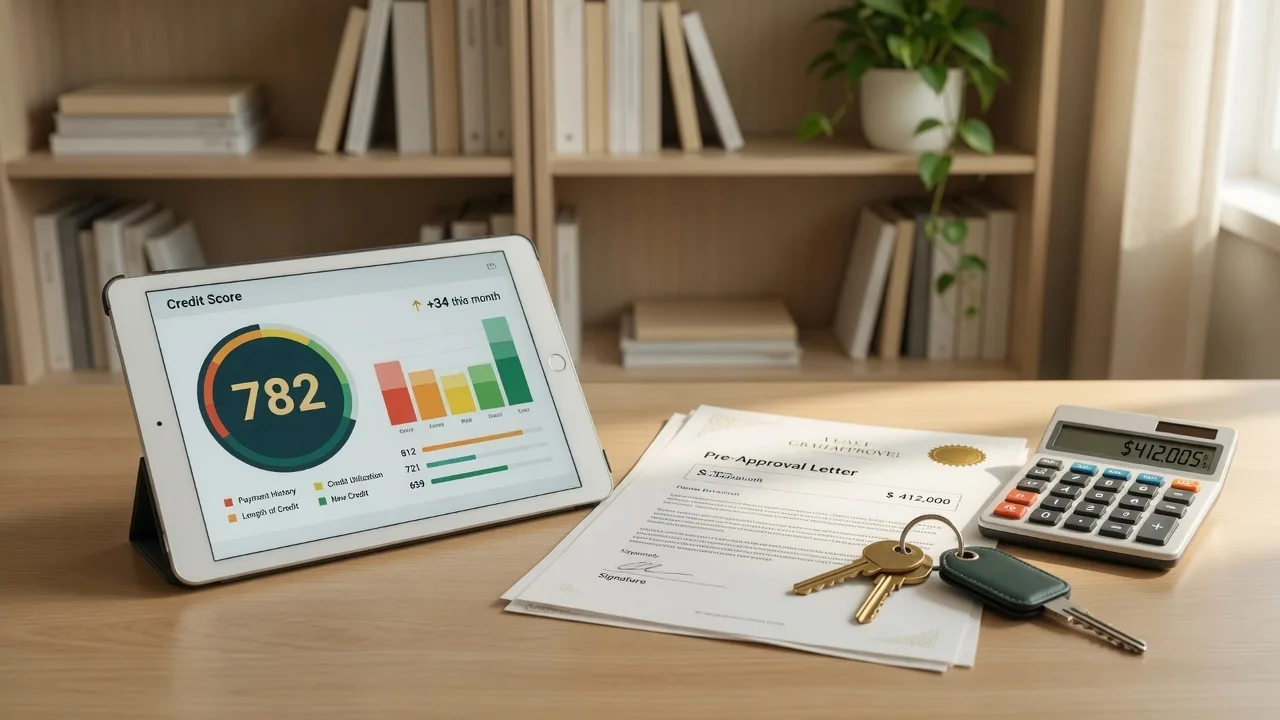
One of the most common questions I hear from first-time homebuyers in Mid-Michigan is: "What credit score do I actually need to buy a house?" It's a great question — and the answer is more encouraging than most people think. You do not need a perfect credit score to become a homeowner in Michigan. There are multiple loan programs available with different credit requirements, and many buyers with scores in the 580s, 620s, and even lower have successfully purchased homes. As a licensed REALTOR® with Keller Williams First, I walk buyers through this process every day. Here's what you need to know about credit scores and home buying in Michigan.
What Credit Score Do Lenders Look For?
Your credit score is one of the first things a mortgage lender evaluates when you apply for a loan. It tells them how reliably you've managed borrowed money in the past — credit cards, car loans, student loans, and other debts. Lenders use your score to assess risk: the higher your score, the lower the perceived risk, and the more favorable the terms you'll receive.
In Michigan, there is no single universal credit score that guarantees approval or denial. Instead, different loan programs set different minimums, and individual lenders may layer on their own requirements — called "overlays." Understanding these tiers helps you know where you stand and what options are available to you.
Credit Score Requirements by Loan Type
FHA Loans: The Most Accessible Option
FHA loans, insured by the Federal Housing Administration, are the most popular choice for first-time buyers and those with limited credit history. Here's why:
- Minimum 580 credit score for a 3.5% down payment — the standard FHA entry point
- Minimum 500 credit score with a 10% down payment — still an option for buyers with lower scores
On a $200,000 home — a common price point in Grand Blanc, Davison, or Swartz Creek — a 3.5% down payment is just $7,000. Combine that with Michigan down payment assistance programs, and many buyers can get into a home with very little cash out of pocket. FHA loans do require mortgage insurance for the life of the loan unless you put down at least 10%, but the lower entry barrier makes them an excellent starting point.
Conventional Loans: The Standard Path
Conventional loans, backed by Fannie Mae and Freddie Mac, are the most common mortgage product in the United States. As of 2025, Fannie Mae removed its formal minimum credit score requirement through its automated underwriting system (Desktop Underwriter), while Freddie Mac made a similar change earlier. However, most lenders still set their own conventional loan minimums:
- Typical lender minimum: 620 credit score
- Best pricing and rates: 740+ credit score
- Manually underwritten loans: 620–640 minimum
The big advantage of conventional loans is that private mortgage insurance (PMI) drops off once you reach 20% equity in your home — unlike FHA's permanent mortgage insurance requirement. For buyers with strong credit, conventional loans often offer the lowest long-term cost.
VA Loans: Zero Down for Veterans
If you're a veteran, active-duty service member, or eligible surviving spouse, the VA loan program is one of the best mortgage products available:
- No official VA minimum credit score
- Most lenders require 620, though some accept scores as low as 580
- Zero down payment required
- No monthly mortgage insurance
VA loans are a tremendous benefit for Michigan's veterans and military families. With no down payment requirement and no PMI, they significantly reduce the cash needed to close. If you're a veteran living in Genesee, Oakland, Livingston, or any surrounding county, it's absolutely worth exploring this option.
USDA Loans: Rural and Suburban Buyers
USDA Rural Development loans are designed for buyers in eligible rural and suburban areas — and parts of Mid-Michigan qualify. These loans offer:
- No official USDA minimum credit score
- Typical lender requirement: 640 for automated approval through the Guaranteed Underwriting System (GUS)
- Scores of 580–639 may qualify with manual underwriting
- Zero down payment required
Communities in Shiawassee, Saginaw, Tuscola, and parts of Lapeer and Genesee County may fall within USDA-eligible areas. It's worth checking — many buyers are surprised to find that homes just outside major metro areas qualify for this zero-down program.
What Credit Score Gets You the Best Interest Rate?
While you can qualify for a mortgage with a score in the 500s or 600s, your credit score directly impacts the interest rate you receive — and that rate determines how much you pay every month for the life of the loan.
Here's a general snapshot of how credit tiers affect pricing:
- 760+: Best available rates — lowest monthly payments and total interest cost
- 740–759: Near-best rates with minimal pricing adjustments
- 720–739: Competitive rates with small adjustments
- 700–719: Good rates, moderate pricing adjustments
- 680–699: Reasonable rates but noticeably higher than top-tier
- 660–679: Higher rates, higher PMI premiums on conventional loans
- 620–659: Eligible for conventional and FHA but with higher costs
- 580–619: FHA-eligible at 3.5% down, limited conventional options
- 500–579: FHA-eligible at 10% down only
How Your Score Affects Your Monthly Payment in Mid-Michigan
Let's put this in real numbers for the Mid-Michigan market. Say you're buying a home at the Genesee County median of approximately $232,750 (RPR, September 2026) with 5% down ($11,638), financing $221,113:
| Credit Score | Est. Rate | Est. Monthly P&I | Difference vs. 760 |
|---|---|---|---|
| 760+ | ~6.5% | ~$1,398 | — |
| 700 | ~6.8% | ~$1,442 | +$44/mo |
| 660 | ~7.1% | ~$1,486 | +$88/mo |
| 620 | ~7.5% | ~$1,546 | +$148/mo |
| 580 (FHA) | ~7.0%* | ~$1,478* | +$80/mo* |
*FHA rates may differ from conventional rates. Figures are estimates for illustrative purposes and reflect approximate market conditions. Your actual rate will depend on your lender, loan program, and market conditions at the time of application.
Over a 30-year mortgage, the difference between a 760 score and a 620 score on this loan could mean tens of thousands of dollars in additional interest. That's why improving your credit before applying is one of the most impactful financial moves you can make.
5 Practical Tips to Improve Your Credit Score Before Applying
Whether your score needs a small boost or a major lift, these strategies make a real difference:
- Pay every bill on time — every time. Payment history is the single largest factor in your credit score. Even one late payment can cause a significant drop. Set up autopay for at least the minimum on all accounts.
- Bring your credit card balances below 30% of your limit. This is called your "utilization ratio" and it's the second-biggest factor. If you have a card with a $5,000 limit, aim to carry a balance under $1,500. Under 10% is even better.
- Don't close old credit accounts. The length of your credit history matters. An old credit card you rarely use still helps your score by showing a long track record of responsible use.
- Avoid applying for new credit before buying a home. Every new application triggers a "hard inquiry" that can temporarily lower your score. Don't open a store credit card, finance furniture, or take out a car loan in the months before your mortgage application.
- Check your credit reports for errors. You're entitled to a free report from each of the three major bureaus — Equifax, Experian, and TransAnnual — at AnnualCreditReport.com. Dispute any inaccuracies: incorrect balances, accounts that aren't yours, or late payments that were actually on time.
Can You Buy a Home in Mid-Michigan with Less-Than-Perfect Credit?
Absolutely. This is one of the biggest misconceptions I encounter. Many buyers assume they need a 700+ score to qualify, but the data tells a different story. FHA loans are specifically designed for buyers with lower credit scores, and Michigan's affordable home prices mean the monthly payments remain manageable even with the slightly higher rates that come with lower scores.
Here's the reality of the Mid-Michigan market: with a median home price around $232,750 in Genesee County (RPR, September 2026), $352,000 in Oakland County, and even more affordable options in Saginaw, Owosso, and Tuscola County, homeownership is within reach for buyers across a wide range of credit profiles. The key is understanding your options and working with professionals who can guide you to the right loan program.
Michigan Programs That Help Buyers with Lower Scores
Michigan offers several state-level programs that are designed to help buyers who may not have perfect credit:
- MSHDA MI Home Loan: Requires a minimum 640 credit score and offers up to $10,000 in down payment assistance as a zero-interest, deferred second mortgage. Works with FHA, VA, and USDA loans.
- MSHDA First-Generation Down Payment Assistance: Launched in 2025, this program provides up to $25,000 for qualifying first-generation homebuyers with a minimum 640 score.
- FHLBI Launch Program: Up to $20,000 in down payment and closing cost assistance through participating Michigan lenders, with flexible credit requirements.
- Employer-Assisted Housing (EAH): Michigan employers can partner with MSHDA to offer down payment grants to employees — available at varying credit levels depending on the employer's program structure.
These programs are especially powerful in Mid-Michigan where home prices are more accessible. A $10,000 or $25,000 assistance grant goes much further here than in higher-cost markets. For a deeper look at all available programs, see our complete Michigan first-time buyer programs guide.
What If You're Not Ready Yet?
If your credit score isn't where you need it to be right now, don't be discouraged. Building or repairing credit is a process, and in many cases, a few focused months of effort can move your score enough to qualify for a significantly better loan program.
Here's a realistic timeline:
- 30–60 days: Pay down credit card balances below 30% utilization. Dispute any errors on your reports. This alone can boost your score by 20–50 points.
- 60–90 days: Continue making all payments on time. Avoid any new credit applications. Monitor your scores through free services.
- 90–180 days: For buyers who need more significant improvement, 6 months of consistent payment history and reduced balances can create meaningful change.
During this time, I encourage you to stay in touch. I can help you understand where you stand, connect you with HUD-approved housing counselors in the Mid-Michigan area, and make sure you're ready to move quickly when the time comes.
Why Working with a Local REALTOR® Matters
Understanding credit scores is just one piece of the puzzle. As your REALTOR®, I work alongside your lender to make sure the entire buying process goes smoothly — from pre-approval through closing day. I help buyers with a wide range of credit situations find the right homes, the right programs, and the right strategy for their unique circumstances.
With more than 20 years of real estate experience and a deep network of local mortgage professionals who specialize in Michigan's assistance programs, I can connect you with the people and resources that make homeownership achievable — even if your credit isn't where you thought it needed to be.
If you're thinking about buying a home in Genesee County, Oakland County, Livingston County, or anywhere in Mid-Michigan, let's start the conversation. Schedule a consultation, call me at 810-513-3335, or email joyce@midmichiganliving.com. Your homeownership journey starts with understanding where you are — and building a plan from there.
Frequently Asked Questions
What is the minimum credit score to buy a house in Michigan?
FHA loans require 580 for a 3.5% down payment or 500 with 10% down. Conventional loans typically need 620. VA loans have no official minimum but most lenders require 620. Michigan MSHDA programs require 640.
Can I buy a home in Michigan with a 580 credit score?
Yes. An FHA loan allows a 580 credit score with just 3.5% down. On a $200,000 home, that's $7,000 down — and Michigan down payment assistance programs may cover part or all of it.
How much does my credit score affect my mortgage rate?
A difference of 140 points (760 vs. 620) can mean $150+ more per month on a typical Mid-Michigan loan — or tens of thousands more in interest over 30 years. Higher scores mean lower rates.
How quickly can I improve my credit score for a mortgage?
Paying down card balances and disputing errors can boost your score 20–50 points in 30–60 days. Building deeper improvements typically takes 3–6 months of consistent on-time payments.
What credit score do I need for MSHDA programs in Michigan?
MSHDA's MI Home Loan requires a minimum 640 credit score. The new First-Generation Down Payment Assistance program also requires 640. These work with FHA, VA, and USDA loan programs.

Keller Williams First · Licensed since 2014 · 20+ years of real estate industry experience · 810-513-3335
Ready to Take the Next Step?
Let's Find the Best Mortgage Path for You
Whether your credit score is 580 or 780, there's a home buying strategy that works for your situation. Let me connect you with the right lender and the right programs for Mid-Michigan.
Schedule a ConsultationOr call 810-513-3335