The Importance of Local Market Knowledge in Real Estate
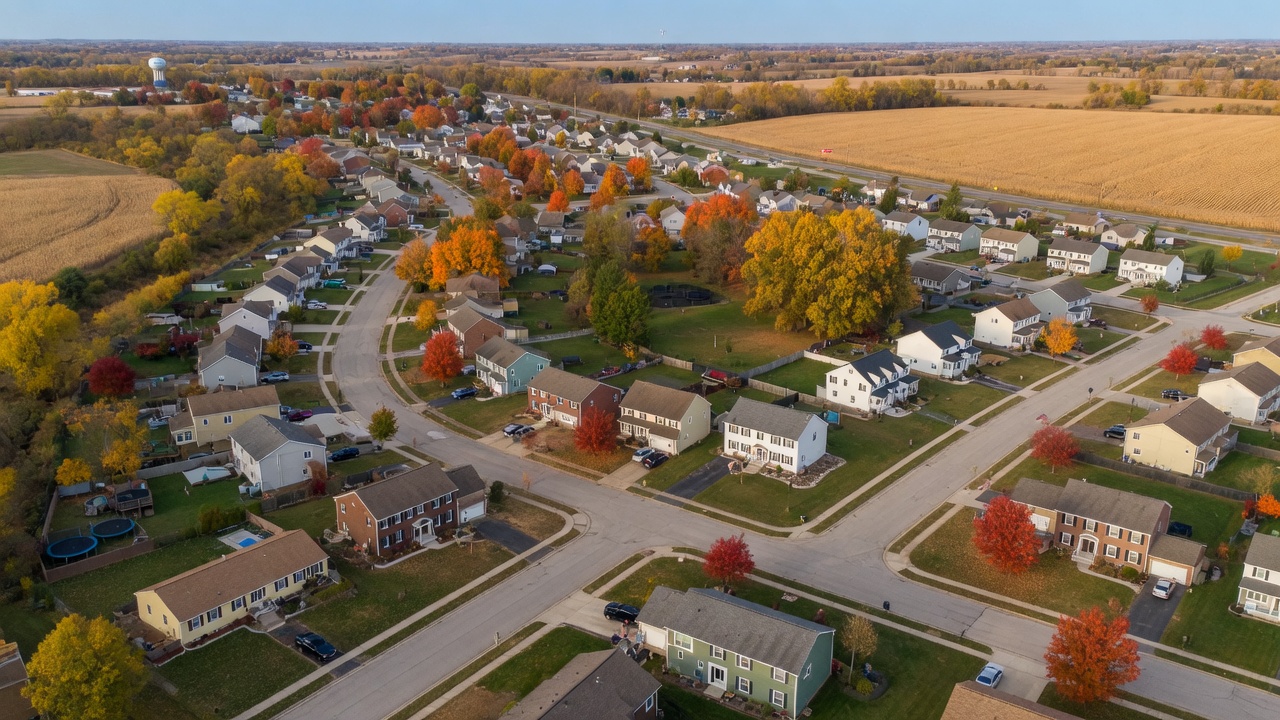
In today's real estate market, buyers and sellers have more data at their fingertips than ever before. Online listings, automated valuations, and market dashboards put information everywhere. But here's what those tools can't do: they can't tell you why one street in Grand Blanc consistently sells above market value while a similar street a half-mile away struggles to appraise. That's where deep local market knowledge becomes your most valuable asset — and why choosing the right real estate agent matters more than you might think. For current market data, see our Mid-Michigan summer 2026 market update.
Neighborhood Nuances That Algorithms Miss
Every community in Mid-Michigan has its own personality, its own buyer pool, and its own pricing patterns. Fenton and Linden sit in the same general area, but they attract different types of buyers, have different school district reputations, and move at different speeds. Holly has lake communities that behave entirely differently from the inland subdivisions. Lake Orion's market dynamics shift depending on whether you're looking at the downtown district, the lake-adjacent properties, or the newer developments on the outskirts.
These aren't details you'll find in an algorithm. They come from years of watching these neighborhoods evolve — talking to buyers, walking through homes, studying how quickly inventory moves, and understanding what drives demand in each specific pocket. When I recommend a neighborhood to a buyer, or help a seller price their home, it's because I've internalized thousands of data points that no dashboard can capture.
Pricing Accuracy: The Difference Between Selling and Sitting
Pricing a home correctly is both an art and a science. The science is the comparable sales data — recent transactions for similar properties in the same area. The art is knowing how to interpret that data in context. A home that backs up to a busy road is not the same as one on a quiet cul-de-sac, even if the square footage and bedroom count match. A colonial in a Grand Blanc subdivision will command a premium over a comparable home in a less established area.
I've seen homes sit on the market for months because they were priced using a generic model that didn't account for these factors. I've also seen homes receive multiple offers within days because they were priced strategically — slightly below market to generate competition. The difference comes down to understanding the local market at a granular level. That kind of pricing accuracy doesn't come from a formula. It comes from experience.
School District Insights That Shape Buying Decisions
For families with children — or even buyers who understand the long-term value impact of school quality — the local school district is one of the most important factors in a home purchase. And school district boundaries in Mid-Michigan are anything but straightforward.
Grand Blanc Community Schools, Fenton Area Public Schools, Holly Area Schools, Lake Orion Community Schools, and Hartland Consolidated Schools all have different reputations, different performance profiles, and different feeder patterns. Some buyers want to be in a specific elementary school's attendance zone even if the high school district is technically the same. Others care most about AP offerings, athletics programs, or class sizes.
I help buyers navigate these decisions by providing context that goes beyond test scores. I know which neighborhoods feed into which schools, how district boundaries have shifted, and what families in each community say about their experience. That's the kind of insight that helps you make a decision you'll be happy with for years — not just on paper, but in practice.
Market Timing and Seasonal Patterns
Michigan's real estate market has a rhythm that's shaped by the seasons in ways that coastal or southern markets don't experience. The spring market kicks off in earnest around March and April, with peak activity running through June. Summer sees steady movement but often fewer new listings. Fall brings motivated sellers who want to close before the holidays. Winter is quieter, but it can be a strategic time for both buyers and sellers who understand the dynamics.
A local agent knows how these seasonal patterns affect your specific neighborhood. In some communities, spring is the best time to list because buyer demand is highest and curb appeal is at its peak. In others, a fall listing might attract less competition. I also stay attuned to broader economic factors — interest rate changes, employment trends, new construction pipelines, and policy shifts — that influence timing across Mid-Michigan.
Local Relationships That Smooth the Transaction
Real estate transactions involve a network of professionals: lenders, inspectors, appraisers, title companies, contractors, and other agents. A local agent with deep community ties has established relationships with these professionals, which translates to smoother communication, faster problem-solving, and often better outcomes.
When an inspection uncovers an issue, I know which local contractors can provide honest, timely assessments. When a lender hits a snag, I have contacts who can help move things along. When negotiations get complex, I know the agents on the other side — their communication styles, their track records, and how to work with them effectively. These relationships are built over years, and they directly benefit my clients.
Why This Matters for Your Next Move
Whether you're a buyer searching for the right home or a seller preparing to list, the quality of your agent's local knowledge has a direct impact on your experience and your outcome. It affects the neighborhoods they recommend, the price they recommend, the strategy they build, and the network they mobilize on your behalf.
I've spent my entire career in Mid-Michigan real estate. I know these communities — not just the listings, but the people, the patterns, and the details that matter. If you're thinking about making a move, I'd love to put that knowledge to work for you. Schedule a consultation or call me at 810-513-3335.

Keller Williams First · 810-513-3335 · Schedule a consultation